When it comes to enhancing the performance of your Dell server, selecting the right hard drives is paramount. In the rapidly evolving world of IT, the need for speed, reliability, and capacity in data storage solutions cannot be overstated. One such solution that can transform your server's capabilities is the 0R87FK PX04SRB192 Dell 1.92TB 12G SAS MLC SSD. Here, we will explore the benefits of incorporating this SSD into your setup and provide a comparison between SAS (Serial Attached SCSI) and SATA (Serial ATA) options.
Understanding the Power of the 0R87FK PX04SRB192 SSD
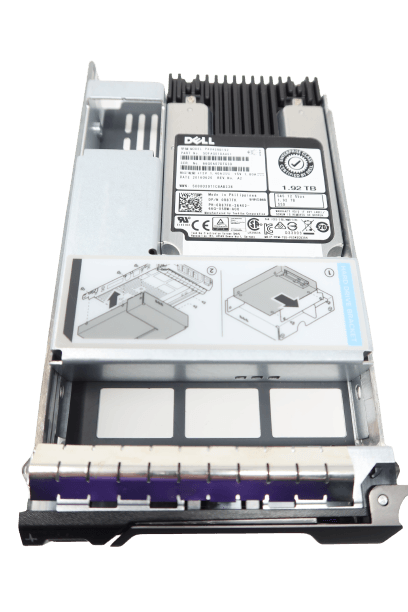
The 0R87FK PX04SRB192 SSD from Dell is designed for those who demand peak performance and reliability. It offers 1.92TB of storage, which is perfect for businesses with intensive workloads. The drive employs SAS technology, providing a maximum throughput and capacity to handle demanding server applications seamlessly.
With its MLC (Multi-Level Cell) technology, this SSD is built to deliver consistent performance and is highly reliable, sticking true to Dell's production standards. Its 3.5" caddie makes it a flexible choice suitable for various server environments. Moreover, with an impressive 2.5 Million Hour MTBF (Mean Time Between Failures) rating, it ensures minimal disruption and maximizes uptime, making it a wise investment for any company looking to bolster their data management capabilities.
For more information on upgrading your Dell server, consider this product option here.
SAS vs. SATA: Which One Fits Your Needs?
Deciding between SAS and SATA for your server can significantly impact its performance. Both have unique attributes suited to different scenarios:
- SAS (Serial Attached SCSI): Ideal for enterprise environments that require high-speed data transfer and robust reliability. SAS drives offer improved performance and scalability, crucial for heavy-duty applications and high-transaction databases. This makes the SAS interface of the 0R87FK PX04SRB192 an excellent choice for critical and intensive workloads.
- SATA (Serial ATA): Generally more cost-effective, SATA drives are suitable for less demanding tasks and environments where speed is not a top priority. They offer larger storage capacities at a lower price, making them a valuable choice for storage-heavy applications where budget is a concern.
Ultimately, the choice between SAS and SATA will depend on your specific use case and performance requirements.
Conclusion
Upgrading your Dell server using the 0R87FK PX04SRB192 SSD can address prevalent hard drive challenges by offering speed, reliability, and capacity through SAS technology. Whether you're running complex computations or need consistent uptime, this drive is configured to meet and exceed expectations.
For more options and information on server disk drives, visit Server Disk Drives. Upgrade your Dell server with confidence and ensure your infrastructure is built on a foundation of reliable and high-performance solutions.